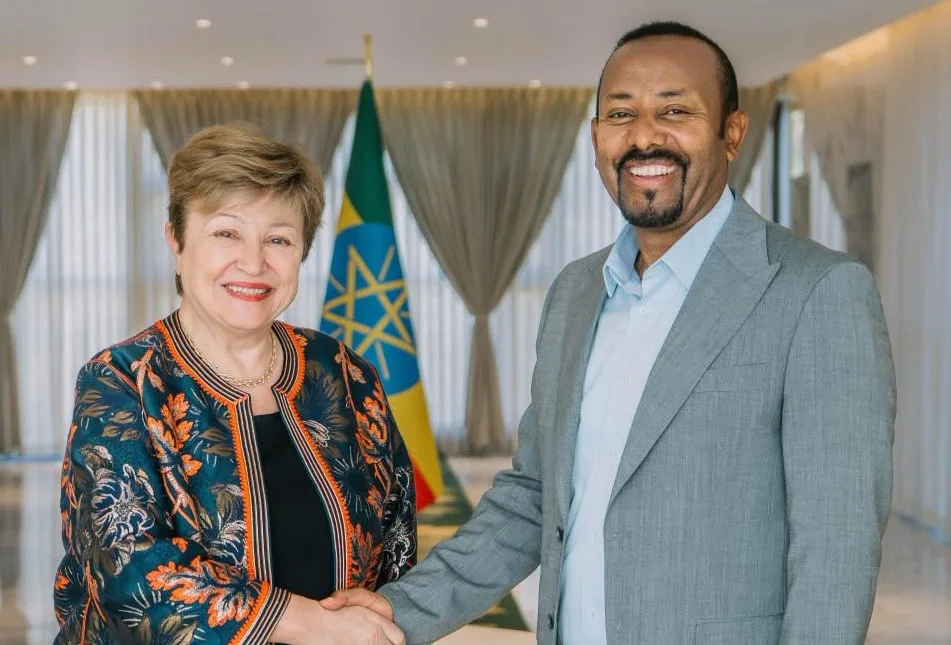
The International Monetary Fund (IMF) has announced that it will release approximately 468 million USD in additional financial support to Ethiopia, following an agreement reached with the Ethiopian government.
This additional funding will be released after both parties reached a staff-level agreement during the fifth round of reviews, with the official implementation awaiting approval by the IMF’s Executive Board.
Alvaro Piris, head of the IMF staff team, stated in a briefing yesterday that the new agreement will be submitted to the organization’s management and Executive Board for approval in the coming weeks.
Once this 468 million USD in additional financial support is approved, the total amount of funding Ethiopia has received under the reform program will reach approximately 2.65 billion USD.
The IMF statement noted that this new funding is being approved at a time when Ethiopia is showing promising results in implementing its Homegrown Economic Reform Agenda. Specifically, it highlighted improvements in export performance, foreign exchange reserves, and government revenue, as well as a decline in inflation.
However, the statement also pointed out that the current conflict in the Middle East has created new external pressures on the country’s economic landscape. It noted that the disruptions caused by the conflict to international trade routes have led to significant increases in the prices of imported fuel and fertilizer, as well as temporary fuel shortages.
Despite this, the report indicated that Ethiopia’s economic activity remains resilient, and the impact on production growth and inflation has been moderate.
The organization further emphasized the need to maintain tight monetary policy, improve the functioning of the foreign exchange market, and follow prudent expenditure management to withstand these severe external pressures and sustain the positive economic momentum.
Additionally, it noted that improving the business environment to support private sector growth and undertaking structural reforms in the financial sector remain priority issues.
On the other hand, it was stated that the debt restructuring discussions with official creditors to ensure the sustainability of Ethiopia’s debt are progressing well, and dialogues with bondholders are continuing.
The IMF delegation, which concluded these discussions held in Addis Ababa from May 14 to May 28, 2026, both in person and subsequently online, announced that during their visit, they held consultations with Finance Minister Ahmed Shide, Governor of the National Bank of Ethiopia Dr. Eyob Tekalign, senior government officials, as well as representatives from the private sector and development partners.