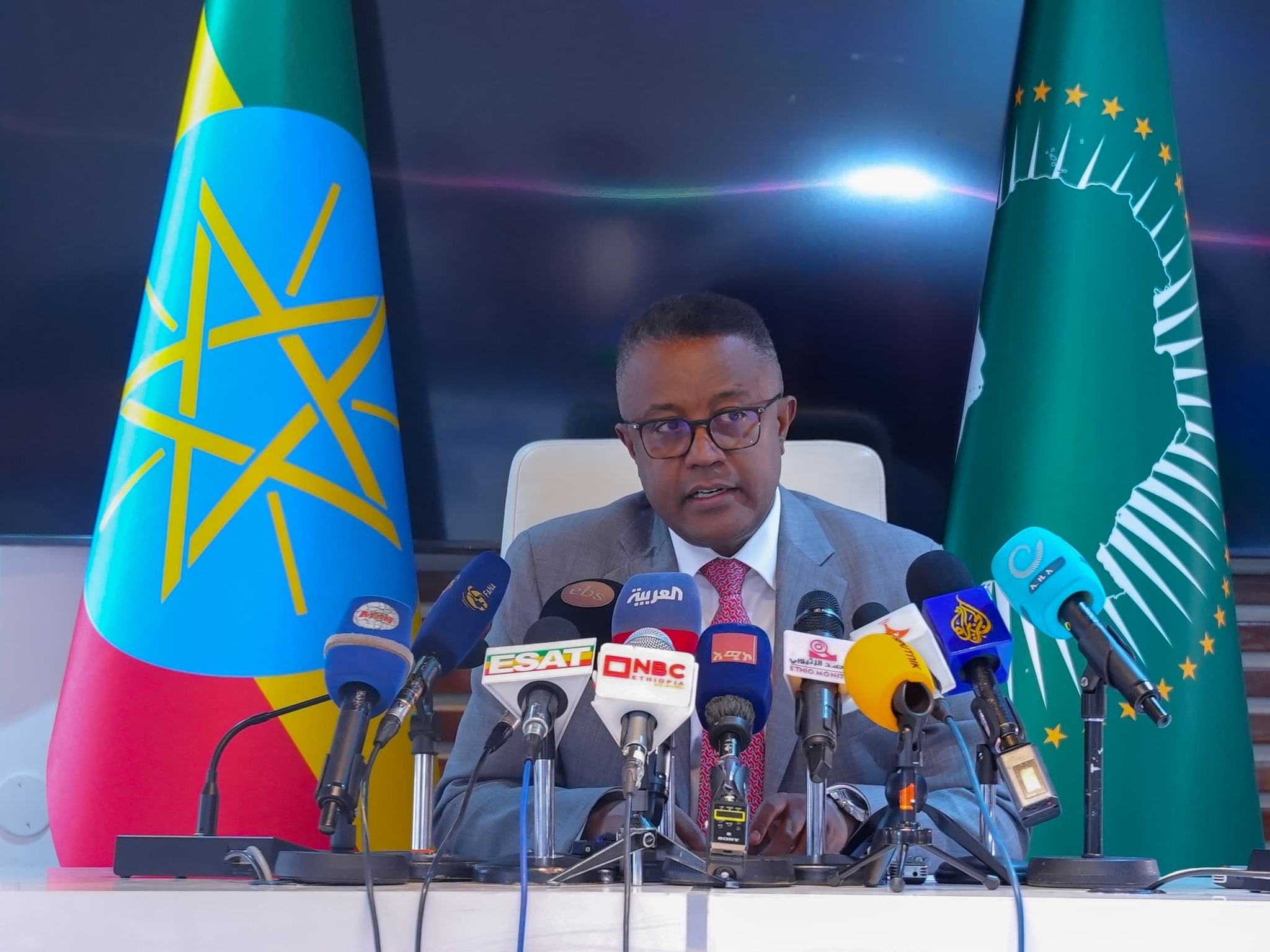
In a statement issued by the Ministry of Foreign Affairs, it was disclosed that while the Ethiopian government actively pursues its agenda for sea access, Egypt has intensified its activities to obstruct Ethiopia's efforts toward the Red Sea.
This indicates that following Ethiopia's official request for sea access, Egypt's tendency to create tensions and provocations in the region—in what appears to be a "siege-like manner"—has significantly increased in an attempt to suppress the issue.
The Ministry’s spokesperson, Ambassador Nebiat Getachew, stated that indeed this tactic is not a new phenomenon, but rather a long-standing strategy that Egypt has pursued for ages. He announced that despite the accumulation of obstacles meant to suffocate Ethiopia, the Ethiopian government will continue to strengthen its sea access agenda even further.
It was noted that Ethiopia's demand for sea access is currently gaining acceptance and support among various international governments and institutions, and it is an agenda supported by the entire population of the country. It was further explained that the path the government is pursuing to achieve this policy and desire is completely peaceful, legal, and purely diplomatic, a point that has been strongly emphasized to leaders of various nations.
As a demonstration of this, leaders of various world countries, ambassadors, and high-level diplomatic guests have recognized the fairness of Ethiopia's quest for sea access and have expressed their firm support at various times for the demand to be resolved through negotiation and peaceful means.
Viewing Ethiopia's diplomatic efforts favorably, these international bodies have repeatedly stated that for the sake of the region's sustainable development and mutual growth, the matter should be resolved based on peaceful bilateral agreements.
However, official statements issued by Egypt and Eritrea show that Cairo has begun providing an explicit response to halt Ethiopia's regional progress by tightening its military and strategic ties with Asmara.
Accordingly, during a high-level discussion forum held by the two countries in Asmara, they set out three main criteria and positions that appear aimed at rejecting Ethiopia's quest for sea access.
The first is their warning that the administration and security of the Red Sea strictly concern only the Red Sea coastal states and that other entities outside the region must not interfere in the matter. The other position they held is that since issues arising around the Red Sea are directly linked to the national security of the Red Sea coastal countries, no non-neighboring entity should involve itself in the matter.
Furthermore, Egypt officially confirmed that it fully supports Eritrea's objectives regarding the administration of the Red Sea and recognizes the unity and sovereignty of the countries neighboring the Red Sea.
Strengthening these three agreements, the two countries signed a new maritime transport agreement aimed at boosting cargo movement and port connectivity on the Red Sea.
On the other hand, it has also been reported that Egypt and Eritrea have decided to establish a new direct shipping line between the ports of Asmara and Cairo.
This implies that Eritrea and Egypt—the downstream basin country—have not only doubled their military and commercial ties, but have also initiated structural efforts to bring the security situation of the Red Sea entirely under their control.
At a time when Ethiopia is gaining international support to achieve its sea access desires through peaceful and diplomatic means, Egypt and Eritrea are moving to create a regional siege by tightening their military and commercial ties in order to obstruct this effort and distance Ethiopia from the Red Sea.
However, the Ethiopian government has resolutely announced that it will withstand all the obstacles placed before it and continue to strengthen its sea access agenda.