

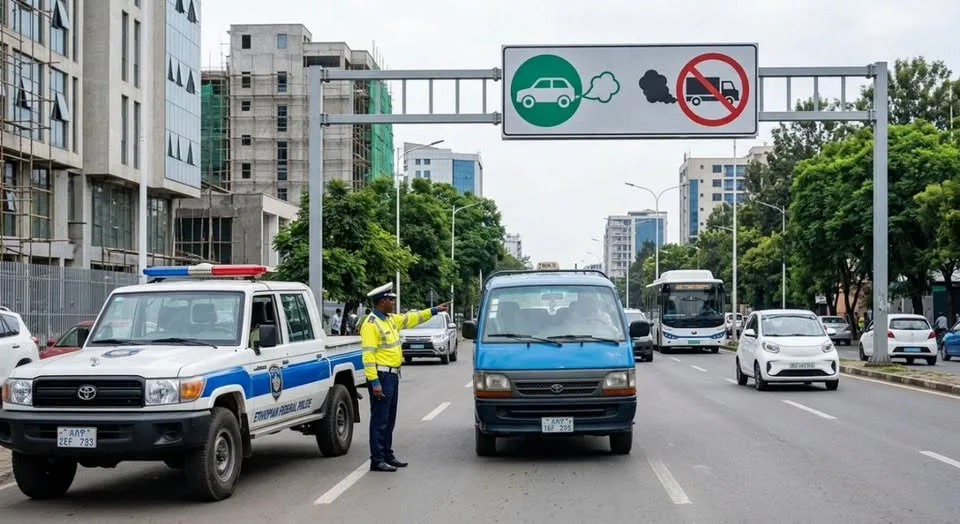
The Addis Ababa City Administration has drafted a comprehensive plan to establish special clean air zones where high-emission vehicles will be restricted, alongside a stricter overhaul of vehicle emission inspection systems to curb escalating air pollution and safeguard public health.
According to the initiative, which will be implemented in collaboration with the Addis Ababa City Transport Bureau, vehicles with high carbon footprints will be barred from entering designated restricted zones.
Conversely, the Addis Ababa Environmental Protection Authority stated that efforts will be deployed to ensure these areas are exclusively utilized by clean and green transport options, such as electric vehicles.
Officials expect this plan to bring about a substantial transformation in the city's traffic flow and air quality, with coordinated preparations already underway for its execution.
As part of a second-phase strategy to target the primary sources of daily air pollution from vehicles, robust and uncompromising controls will be enforced regarding the annual technical inspection certificate, commonly known as the "Bolo."
During the Bolo renewal process, testing centers will strictly verify whether vehicles meet mandatory smoke emission standards. Vehicles that fail to meet these thresholds will not be issued a renewal certificate until necessary engine and technical adjustments are completed, authorities confirmed.
To enforce this framework at all levels, the Transport Bureau and relevant bodies are undertaking synchronized preparations.
Furthermore, authorities announced that vehicles found exceeding permitted emission thresholds during random roadside inspections will be immediately taken out of service outside of legal channels.
A rigorous monitoring and regulatory network will also be deployed to fully translate the new system into practice.
The Addis Ababa Environmental Protection Authority and the Transport Bureau have called on vehicle owners to fulfill their responsibilities toward preventing air pollution by regularly maintaining their vehicles and verifying their technical fitness to ensure the success of this civic and national objective.
This development follows previous announcements regarding the upcoming implementation of a mandatory national directive to regulate vehicle emission levels across Ethiopia in order to curb pollution caused by vehicular exhaust gases.
Prepared by the Ministry of Transport and Logistics in March of this year, the guideline requires vehicles to utilize emission-control technologies to prevent environmental degradation stemming from vehicular carbon output.


