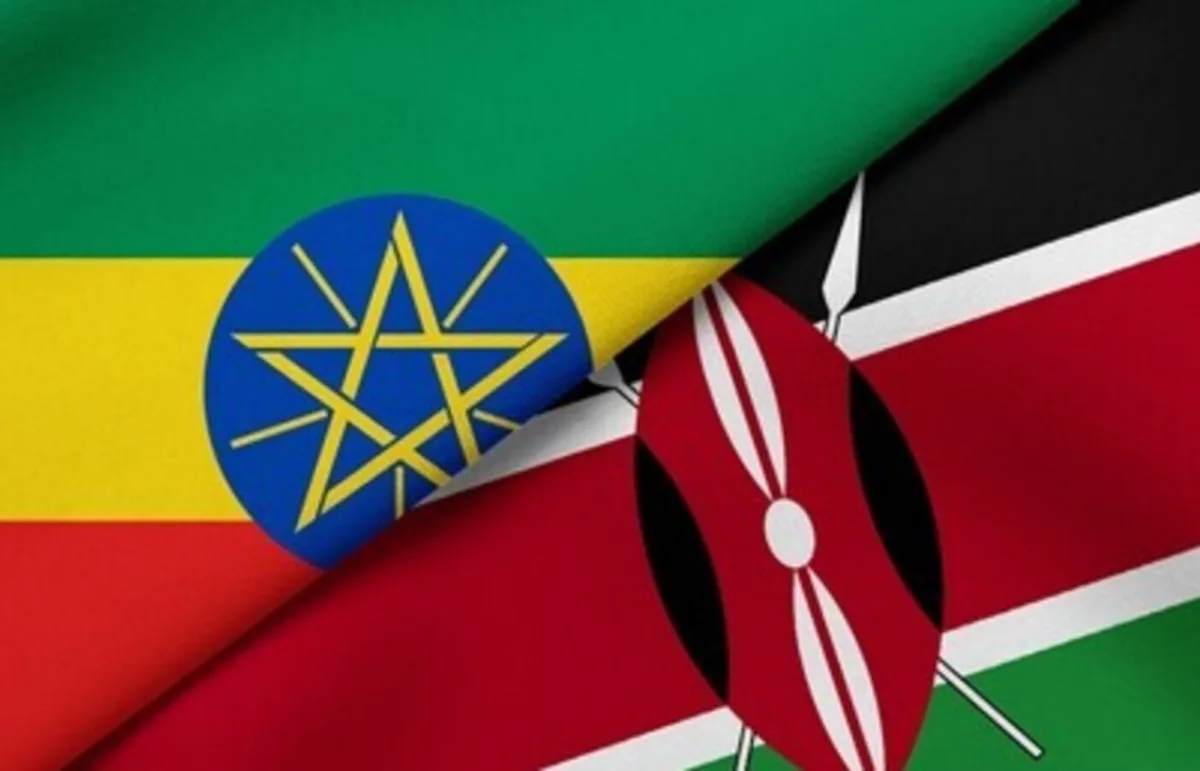
Ethiopia has lost its title as East Africa’s largest economy after a sharp depreciation of the birr reduced its gross domestic product (GDP) when calculated in US dollar terms.
The shift occurred following major macroeconomic reforms introduced in July 2024. As part of a four-year, $3.4 billion agreement with the International Monetary Fund (IMF), Ethiopia relaxed foreign exchange controls and moved toward a market-driven exchange rate system.
The resulting devaluation caused the birr to fall significantly against the dollar, triggering a steep drop in the country’s dollar-denominated GDP valuation.
Consequently, neighboring Kenya has reclaimed the top spot as East Africa's largest economy, ending Ethiopia's five-year reign.
Citing data from the IMF, media reports in Kenya indicate that Kenya’s nominal GDP grew by 13.7 percent in 2025 to reach $135.92 billion. This surpassed Ethiopia’s GDP, which fell by nearly 40 percent from $210 billion in 2024 down to $126.35 billion.
The $9.57 billion gap between the two countries has elevated Kenya to the seventh-largest economy in Africa, while Ethiopia has dropped to eighth place.
However, reports clarify that the shift in rank does not mean Kenya’s economy grew faster than Ethiopia’s in real terms. Rather, exchange rate movements played the decisive role in reshaping dollar-calculated economic rankings.
When a country’s currency loses value, the total dollar value of its output declines on paper even if real domestic production continues to grow. IMF figures show that Ethiopia’s real GDP grew by 9.2 percent in 2025, substantially outpacing Kenya’s 4.6 percent expansion.
While the birr’s devaluation lowered Ethiopia's international output valuation, a strengthening Kenyan shilling pushed up the dollar equivalent of Kenya's domestic production.
According to IMF forecasts, Kenya is expected to maintain its position as East Africa’s leading economy in the near term.