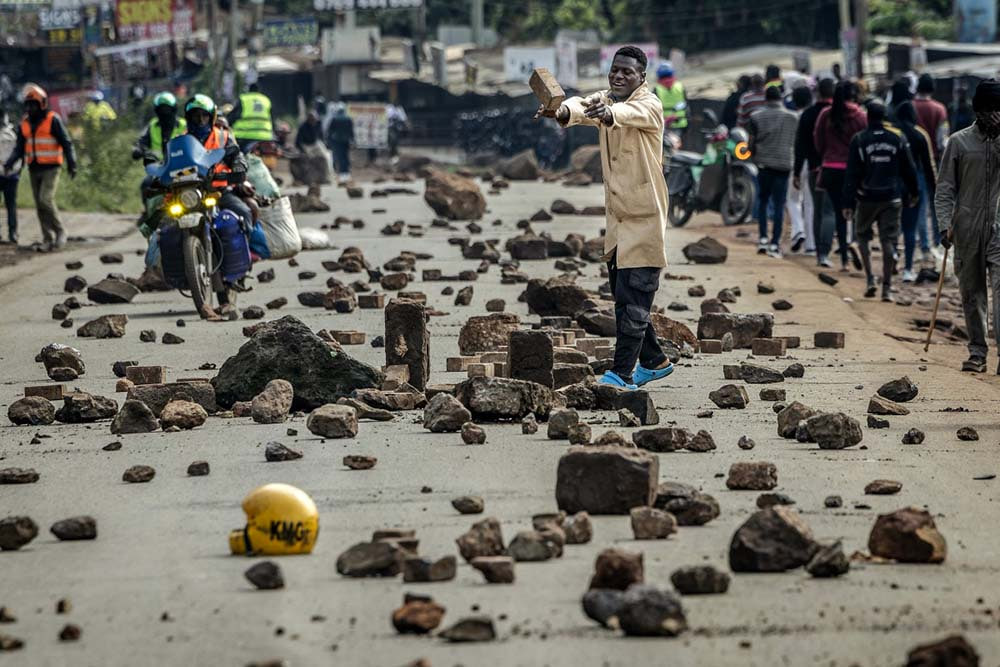
Following the historic high increase in fuel prices in Kenya, a large-scale public protest and a nationwide strike broke out in the capital city Nairobi and different parts of the country.
Due to this strike, many travelers were stranded in various parts of the city and on roads, while protestors blocked roads by burning tires on major highways.
Based on the joint position decided by all structures in the sector, including the Public Transport Minibus Owners Association, motorcycle riders, truck drivers, and digital taxi associations, transport services have completely stopped.
In a joint statement issued yesterday, Sunday, the coalition stated that the purpose of the strike is to protest the high cost of living that the fuel price increase is causing on citizens, and confirmed that it has launched what is called the largest coordinated action in the history of the country.
In addition, it announced that this action is a call not only for transport operators but for every Kenyan citizen, and stated that since the resident is the ultimate victim of the fuel price increase, it will cause the prices of transport, food, electricity, and basic goods to skyrocket.
Several influential sector associations participated in the strike, including the Public Transport Sector Federation, the Kenyan Drivers Association, the Truck Drivers Association, and the Digital Taxis Association, which the coalition stated made the strike 99 percent successful.
On their part, private vehicle drivers chose not to leave their homes, and according to the safety risk advisory passed by the Private Schools Association to its members, it is said that most schools shifted their daily activities to online learning.
This public anger was sparked following the historic high increase in fuel prices in Kenya last Friday, and according to this price revision, the price of diesel increased by 23.5 percent, while the price of petrol grew by 8 percent.
However, up until the compilation of this report, President William Ruto, who is currently outside of Kenya, has given no comment on the matter. It is remembered that during last month's price revision, although the President linked the increase to the Iran war, he reduced taxes back then to prevent a high inflation from occurring.
The Kenya National Chamber of Commerce and Industry (KNCCI) on its part warned that this fuel price increase will have a direct impact on all goods and services in the country. In a statement issued by the Chamber, the comparison of the months of April and May shows that globally the price of crude oil grew by only 10.7 percent, but in Kenya, the price of diesel increased by 23.5 percent.
The country's former Vice President Rigathi Gachagua, who joined the opposition side after being removed from his position, on his part blamed corrupt traders who want high profits as responsible for this high price increase.
Gachagua, by comparing Kenya's fuel price with neighboring landlocked countries like Uganda that depend on Kenya to get port services, cited as an example that the fuel price in Uganda is lower than in Kenya.
Kenya is a country that serves as a primary transport hub for the region's traders who transport goods imported through the Port of Mombasa by land transport.